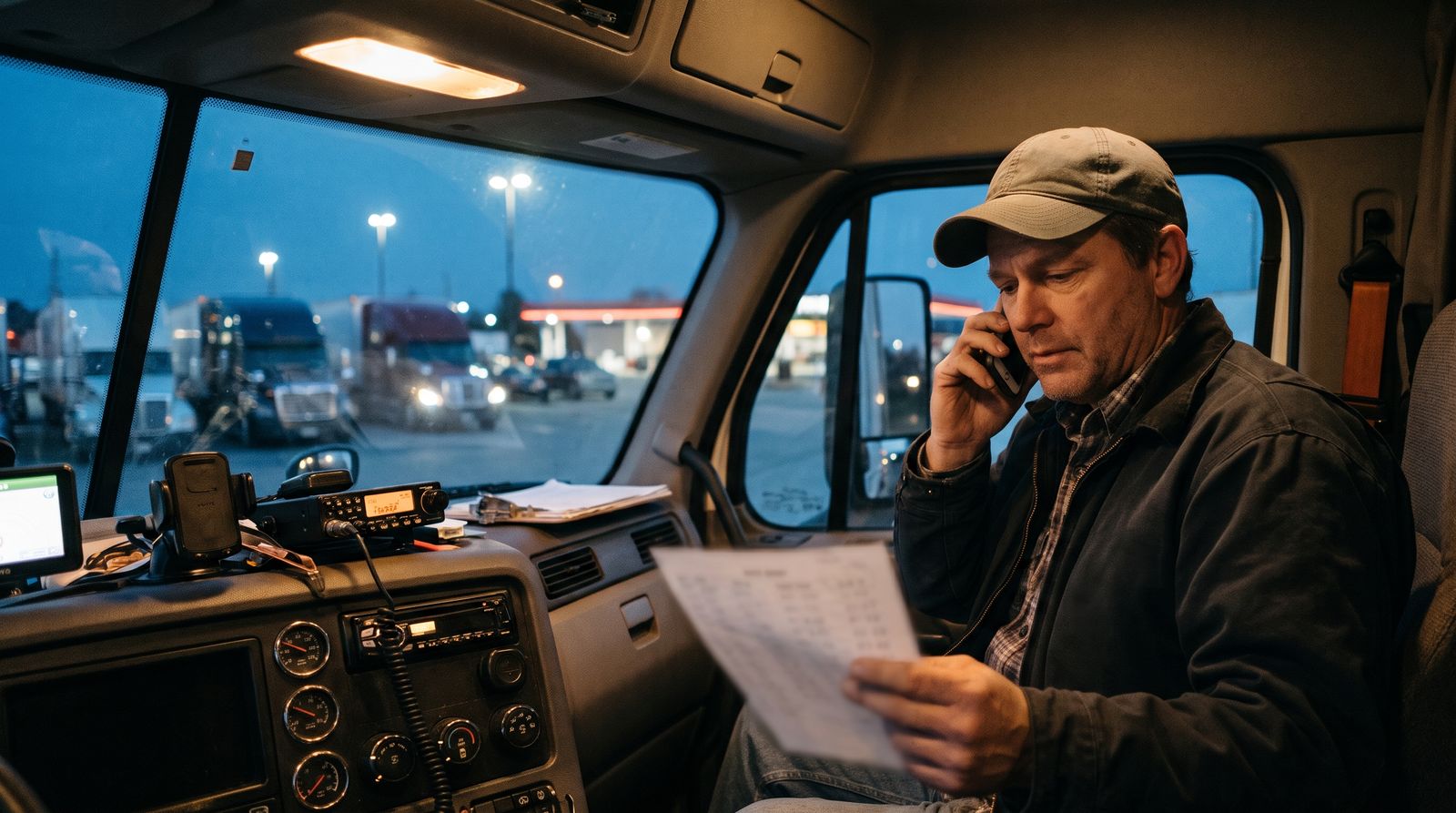
The scams new carriers see most
| Scam | How it works |
|---|---|
| Double brokering | A fake "carrier" or broker takes a load, then hands it to you at a lower rate and disappears with the payment. You haul and never get paid. |
| Broker impersonation | Someone uses a real broker's name and a look-alike email domain to book you, then changes the delivery or payment details. |
| Carrier identity theft | A fraudster uses your MC and USDOT numbers to book loads, steal cargo or collect payments in your name. |
| Phishing | Emails or texts that look like FMCSA, a load board or a factoring company, asking you to log in or "verify" your account. |
| Fictitious pickups and cargo theft | A load is redirected to a different address or picked up with forged paperwork. |
Warning signs
- A rate far above the market for the lane.
- Pressure to roll before the rate confirmation is signed.
- An email domain that is slightly different from the broker's real one, or a free email address.
- A phone number different from the one on the broker's FMCSA record.
- Last-minute changes to the delivery address or to who pays you.
- Requests to pay a fee, buy fuel cards or send money first.
- Anyone asking for your FMCSA, Login.gov or load board password, or your USDOT PIN.

Up next
Check every new broker
3 of 6 sections
Check every new broker
- 1Look up the broker on SAFER: broker authority active, name and address match.
- 2Call the phone number on the FMCSA record, not the one in the email, and confirm the load and the person.
- 3Check credit and days-to-pay on your load board or with your factoring company.
- 4Make sure the rate confirmation comes from the broker's real domain and matches what you agreed.
Protect your own identity
- Turn on multi-factor authentication for Login.gov, load boards, email and banking.
- Never share your FMCSA login or USDOT PIN. FMCSA does not ask for them by email.
- Check your FMCSA registration details regularly for changes you did not make.
- Complete your profile on carrier identity platforms such as Highway, so brokers can verify the real you.
- If brokers call about loads you never booked, act immediately: someone may be using your numbers.
- Use a business email on your own domain and keep contact details identical everywhere.
Never re-broker a load
Passing a load to another carrier without the broker's consent breaks almost every broker-carrier agreement, and arranging freight for others requires broker authority. Haul what you book yourself.

Up next
If it happens to you
6 of 6 sections
If it happens to you
- 1Stop: do not release cargo or send money.
- 2Call the real broker or shipper on the numbers from their FMCSA record.
- 3Report it to FMCSA through the National Consumer Complaint Database or by calling 1-888-DOT-SAFT (1-888-368-7238).
- 4Report internet fraud to the FBI at ic3.gov, and cargo theft to local police.
- 5Warn your factoring company and insurer, and change passwords on every affected account.