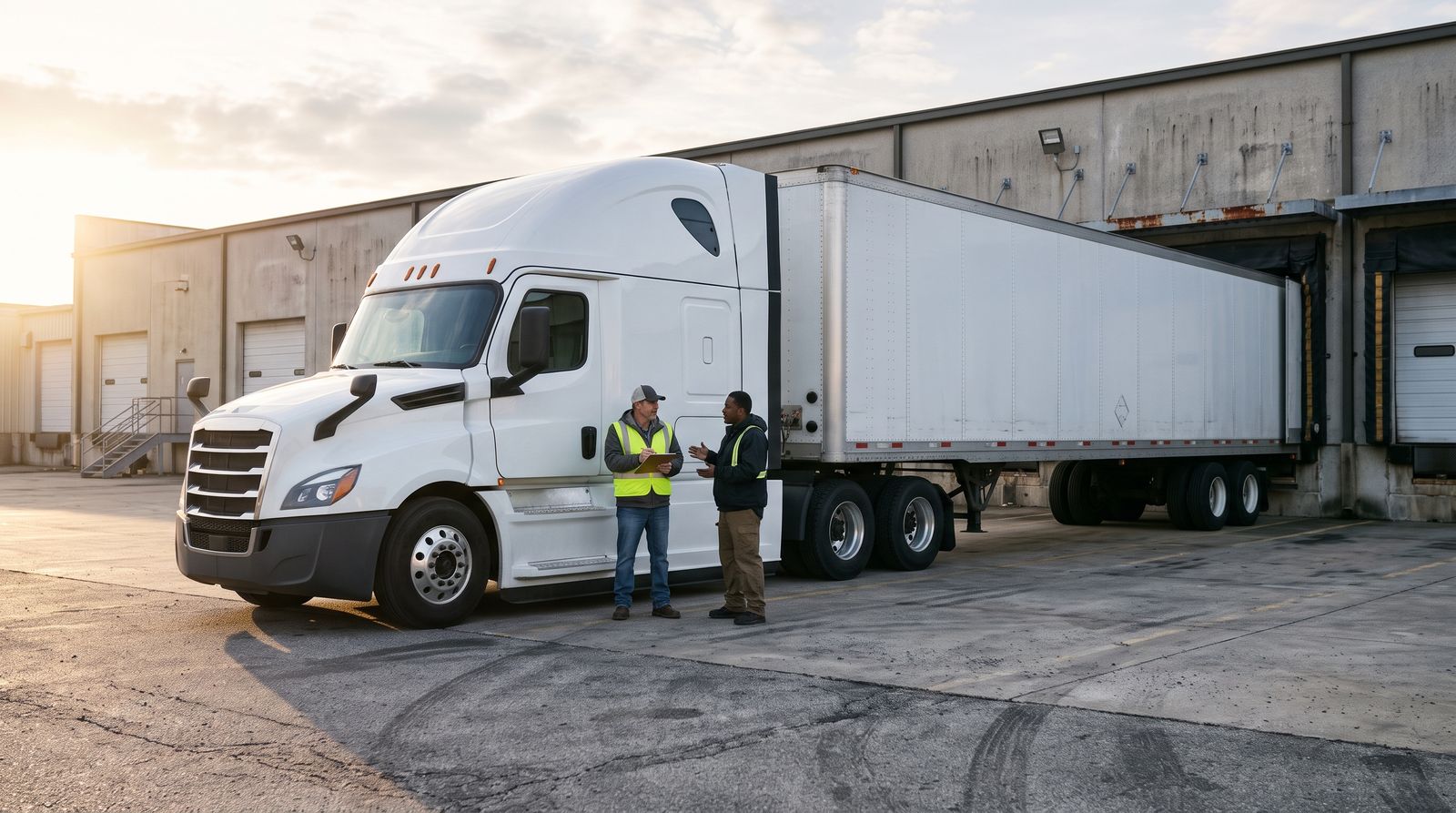
How to Find Loads as a New Trucking Company
Getting your authority is only half the job; the truck earns nothing until it is loaded. New authorities often find that some brokers will not work with them at first. This guide covers every place to find freight, which sources accept new carriers, what brokers need from you, and how to grow from load boards to regular lanes.
- 7 min read
- Updated November 3, 2026
- 12 sections
Where new carriers find freight
There are six main sources of freight. Carriers who last use several at once, so one slow board or one broker that stops calling never parks the truck.
| Source | How it works | Best for |
|---|---|---|
| Load boards | Brokers and shippers post loads; you call or book. | Filling the truck from day one |
| Broker apps | Large brokers let you book loads in an app, often at a posted rate. | Quick, simple bookings |
| Broker relationships | Brokers you deliver well for offer you their regular lanes. | Steady freight after month one |
| Direct shippers | You haul for the shipper with no broker in between. | Better rates, once you are established |
| Government contracts | You bid on federal, postal, state or local hauling contracts. | Long-term, predictable work |
| Leasing on | You haul under another carrier's authority and freight. | Learning the business with less risk |
Load boards: where most new carriers start
A load board is a subscription marketplace where brokers and shippers post freight. The biggest are DAT and Truckstop, with lower-cost options such as 123Loadboard and the board inside the Trucker Path app. Pick one main board for your equipment and lanes before paying for a second.
- Set alerts for your home market and your best outbound lanes so you see loads before other carriers do.
- Use the board's broker credit and days-to-pay information. A high rate from a broker who pays in 60 days, or not at all, is not a good load.
- Look at the rate data, not just the posted rate. Posted rates are a starting point for negotiation.
- Review after 60 days and cancel any board that did not pay for itself.
Up next
Broker apps and digital freight platforms
3 of 12 sections
Broker apps and digital freight platforms
Many large brokers and shippers now let carriers find and book loads in an app or online portal: for example Uber Freight, Amazon Relay, J.B. Hunt 360, Schneider FreightPower and the carrier apps from C.H. Robinson, TQL and RXO. Signing up is usually free, so set up several.
Each platform has its own requirements. Some book new authorities right away; others want a few months of history or higher insurance limits than the federal minimum. Third-party reports say Amazon Relay, for example, looks for authority about six months old and 1 million dollars of auto liability, so check each platform's current rules when you apply.
Set up your MyCarrierPackets, RMIS and Highway profiles early. Many brokers onboard carriers through these services, and a complete profile can get you approved in minutes.
The carrier packet brokers ask for
- 1Your MC authority letter (the grant of operating authority) and USDOT number.
- 2A W-9 with your legal business name and EIN.
- 3A certificate of insurance naming the broker as certificate holder, showing auto liability and cargo coverage.
- 4A notice of assignment, if you use a factoring company.
- 5A signed broker-carrier agreement. Read it: it sets payment terms, fees, liability and rules against re-brokering.
Keep these in one PDF so you can send them in minutes. Brokers often book the carrier who answers first.
Up next · 6 of 12
Finding direct shippers
Finding direct shippers
Direct freight pays more because there is no broker margin, but you take on billing, collections and the shipper's expectations. Most direct relationships start small: a shipper gives you an overflow or backup load, you deliver perfectly, and more follows.
- 1List 50 local businesses that ship what your truck hauls: manufacturers, distributors, building suppliers, food processors, recyclers.
- 2Use your state manufacturers directory, chamber of commerce, industrial parks and supplier directories.
- 3Ask for the shipping or logistics manager and offer one lane you can cover reliably.
- 4Leave a one-page sheet with your equipment, service area, insurance limits, USDOT and MC numbers.
- 5Follow up every two to three weeks.
Never go around a broker to win their shipper. Most broker-carrier agreements forbid it.
Government and postal contracts
Federal hauling work, including USPS mail-hauling contracts (Highway Contract Routes and Contract Delivery Service), is posted as solicitations, most often on SAM.gov. You register your company in SAM.gov for free, read the full solicitation package, and submit a bid by the deadline. State DOTs, counties and cities post their own hauling contracts on their procurement pages.
Contract work takes paperwork and patience, so treat it as a six to twelve month project alongside your regular freight. Be wary of websites that charge for "postal route jobs": real solicitations are free to view.
Where to look for your type of truck
| Equipment | Good places to look |
|---|---|
| Dry van | Main load boards, broker apps, Amazon Relay, retailers' and distributors' carrier programs |
| Reefer | Produce and food shippers, cold storage warehouses, seasonal produce lanes |
| Flatbed and step deck | Steel, lumber, building materials and equipment dealers |
| Hot shot | Equipment dealers, construction suppliers, oilfield and agriculture |
| Power only | Drop-trailer programs from Amazon Relay, J.B. Hunt 360box and other brokers |
| Box truck and cargo van | Expedite carriers (often lease-on), furniture and appliance delivery, local distribution |
Up next
Booking at the right rate
9 of 12 sections
Booking at the right rate
- Know your break-even rate per loaded mile before you call. Count the empty miles to the pickup and after the delivery. Our trucking profit calculator works it out in a minute.
- Ask about detention, layover, lumper and accessorial pay, and get them in the rate confirmation.
- Check the rate confirmation matches what you agreed before you dispatch.
- Check the broker's authority on SAFER and their payment reputation before the first load.
Getting paid
Brokers often pay 30 days or more after they receive your invoice and signed proof of delivery. Options to speed it up include broker quick-pay programs (usually for a fee) and freight factoring. Whatever you choose, send the invoice, rate confirmation and signed bill of lading the same day you deliver.
A 90-day plan for your first loads
- 1Week 1: set up one load board, your carrier onboarding profiles and five broker apps. Work out your minimum rate per mile.
- 2Weeks 2 to 4: book, deliver on time and send paperwork the same day. Note every broker you would work with again.
- 3Month 2: ask your three best brokers for their regular lanes from your area, and reapply to brokers that turned you down.
- 4Month 3: contact 20 local shippers. Review revenue per mile, empty miles and days-to-pay by source, and drop the weakest source.
Avoiding freight scams
- Verify every new broker on SAFER and call the number listed there before you accept a load.
- Be suspicious of loads paying far above market, last-minute changes to pickup or delivery address, and requests to pay fees up front.
- Never share your FMCSA login, USDOT PIN or load board password. FMCSA does not ask for them by email.
- Report fraud and identity theft to FMCSA.
Free PDF
The New Carrier Load Sources List
Every place a new trucking company can find freight in one list: load boards, broker apps, carrier onboarding networks, government contracts, direct shippers and lease-on programs, plus a 90-day plan and a broker call script.
- 30+ freight sources grouped by type, with websites
- Which sources usually accept a brand-new authority
- Freight ideas for box trucks, hot shots, reefers, flatbeds and power only
- A 90-day plan to go from first load to regular lanes
- A broker call script and a broker safety checklist
Step 1 of 2
Do you already have a USDOT number?
Either way the PDF is free. Your answer helps us send you what is useful next.
Frequently asked questions
Can I get loads right after my authority is active?
Yes, once your authority is active and your insurance is on file. Some brokers will book you immediately; others have their own minimum time-in-business rules, so start with load boards and brokers that work with new carriers.
What is the best load board for a new trucking company?
DAT and Truckstop have the most loads; 123Loadboard and the Trucker Path board cost less. Pick one main board for your equipment and lanes, use its broker credit data, and add broker apps (most are free) before paying for a second board.
Are load boards worth paying for?
For most new carriers, yes: they are the fastest way to see available freight and typical rates in your lanes. Compare subscription levels and cancel what you do not use.
How do I get loads without a load board?
Sign up for broker apps such as Uber Freight, J.B. Hunt 360 and the large brokers' carrier apps, build relationships with brokers you deliver well for, contact local shippers directly, bid on government contracts, or lease on to a carrier.
Can I haul for Amazon Relay with new authority?
Amazon sets its own requirements and changes them. Third-party reports say Relay looks for authority about six months old and auto liability of 1 million dollars, above the federal minimum. Check Amazon Relay's current requirements before you apply.
Should I use a dispatcher?
A good dispatcher can save time, but you still own the decisions and the risk. Get a written agreement, check the fee, make sure they act only as your agent, and never let them book loads below your break-even rate.
Resources
Free downloads, official forms and tools for this topic.
Free downloads
Official forms and lookups
Official sources
Rules and fees change. Check the current figures on these official pages before you file anything.
- FMCSA: Broker and carrier fraud and identity theft
- eCFR: 49 CFR 371.3 (broker records)
- eCFR: 49 CFR Part 376 (truth in leasing)
- SAM.gov contract opportunities
- IRS: About Form W-9
This page is general information, not legal, tax or insurance advice. Fees and rules change; confirm current amounts with each agency. Last reviewed November 3, 2026.
Keep reading
Want us to handle it?
Open Trucking Company files the paperwork, tracks your renewals and keeps your records audit-ready, so you can get on the road.